Grown, not foraged
Cultivated Sparassis crispa, sourced from Korea, where the growing techniques for this difficult species are well established. Wild harvest at any commercial scale would not be sustainable or consistent.

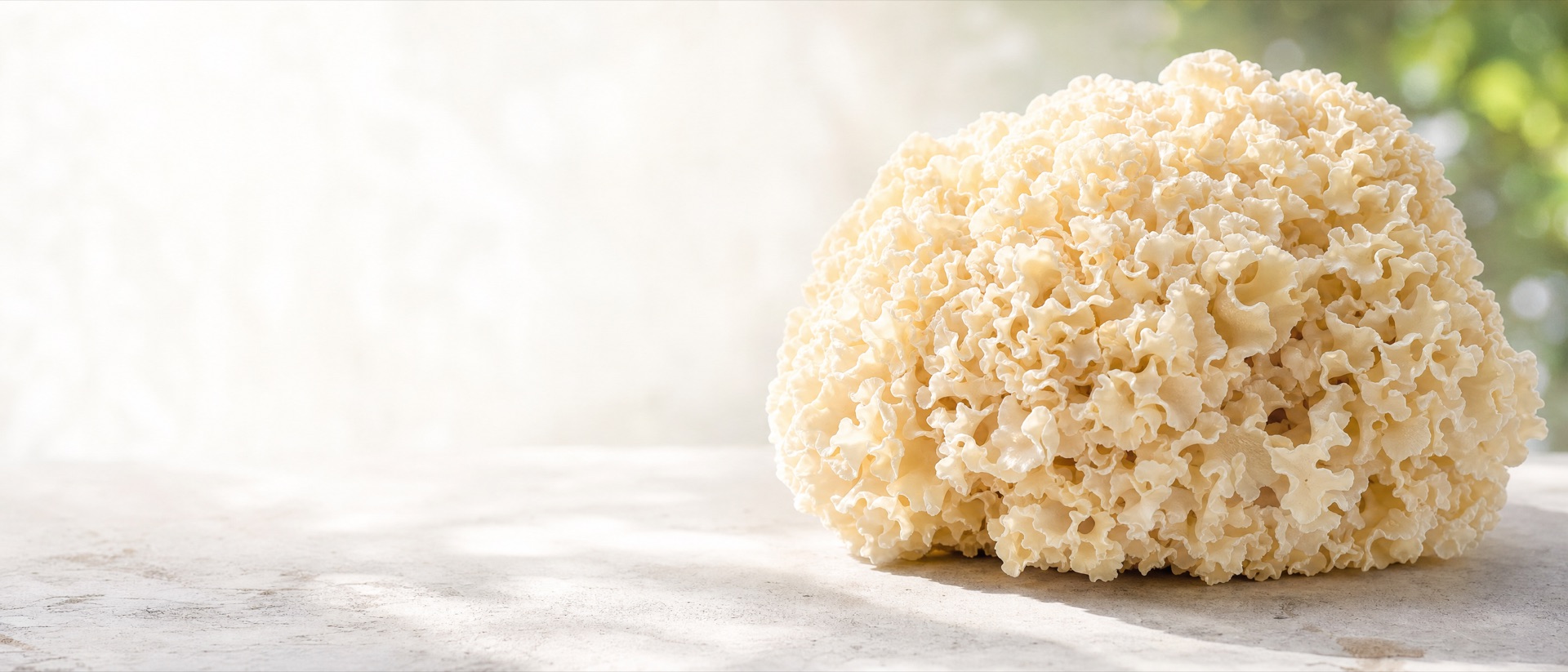
Cellivoo / Ingredient one
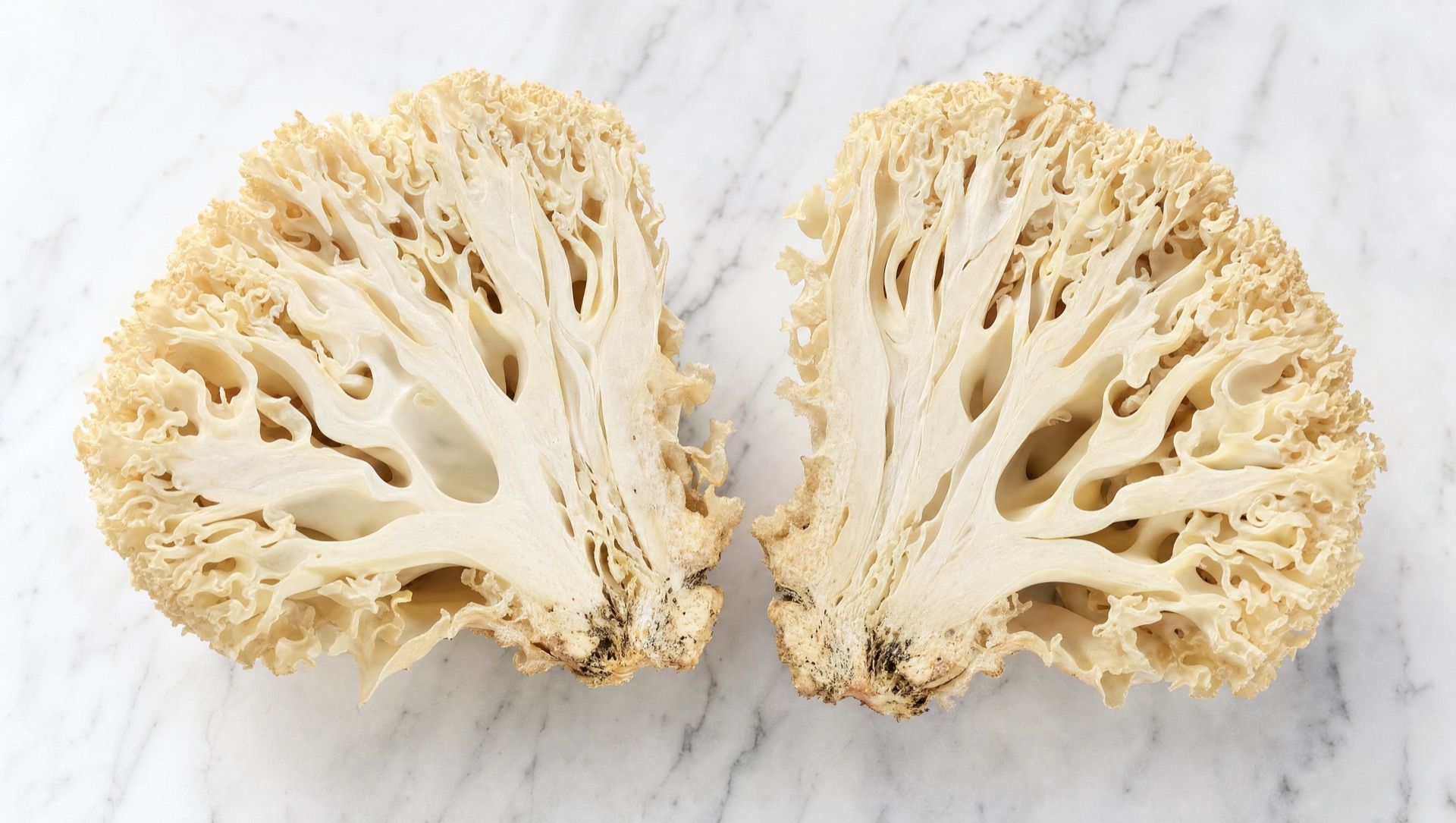
The cauliflower mushroom. Hanabiratake in Japan. A notably beta-glucan-rich species, and still little known outside the people who study fungi for a living.
More than 40% beta glucanGenome sequenced 2018400 mg per serve
The organism
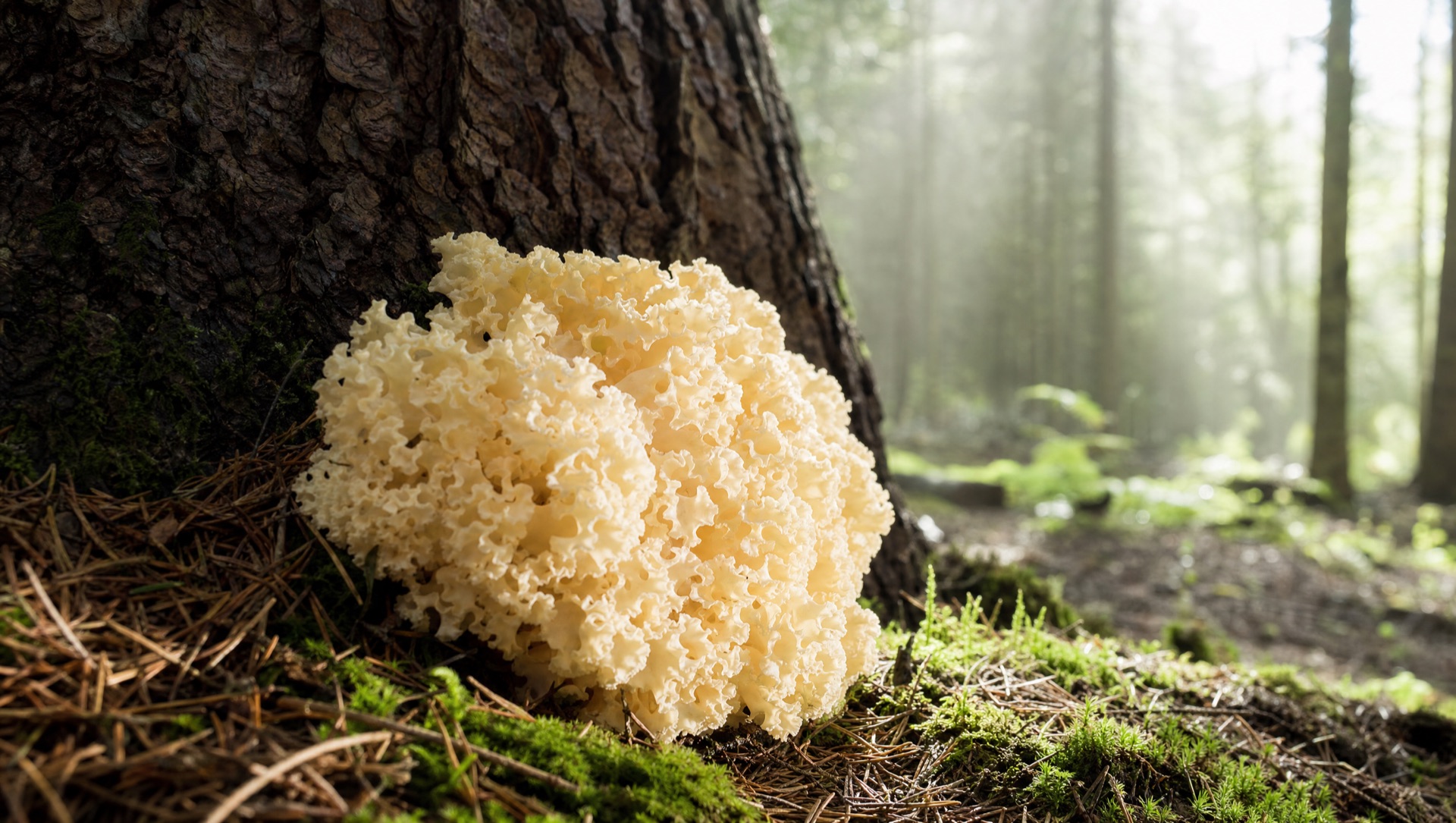
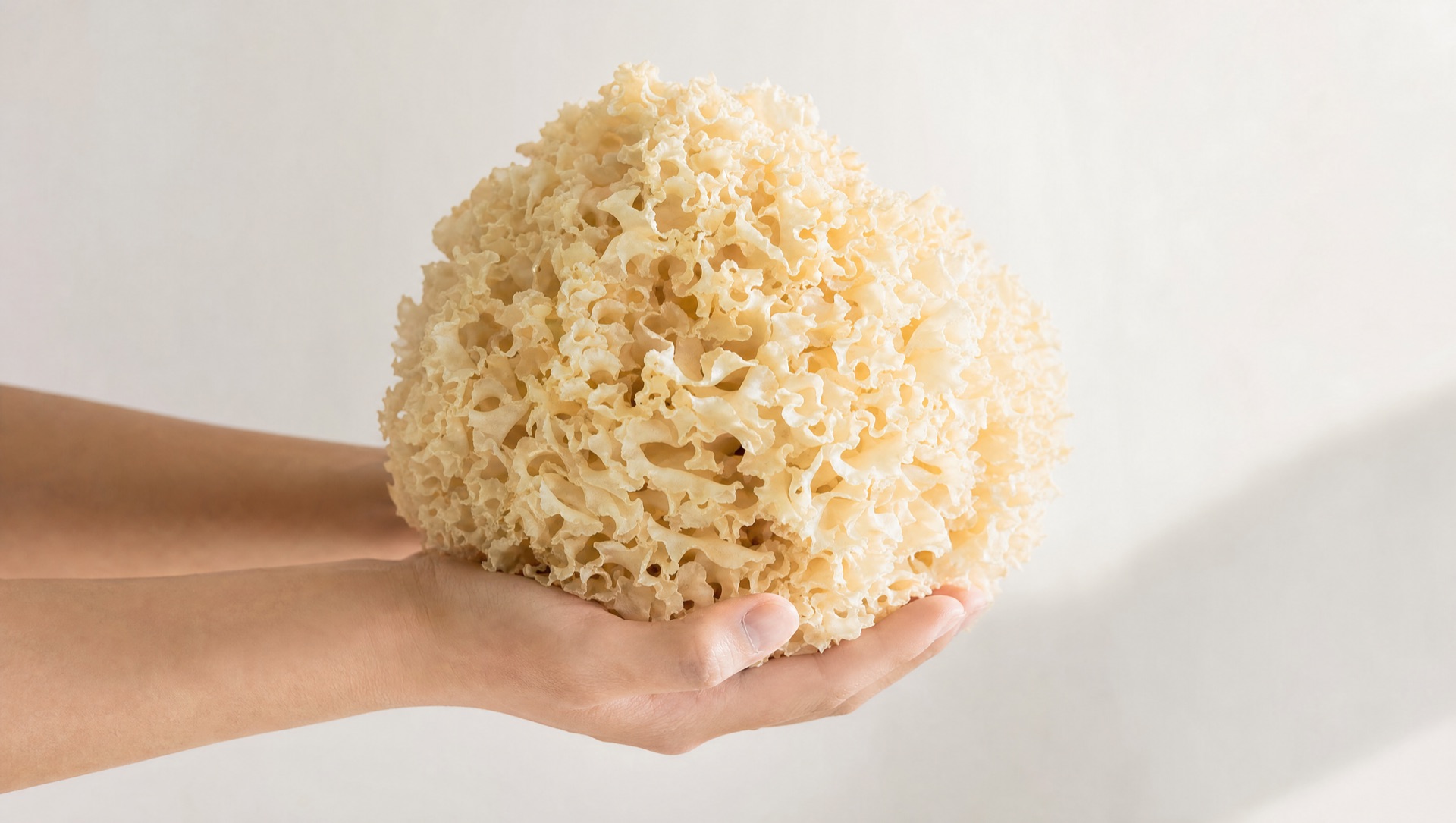
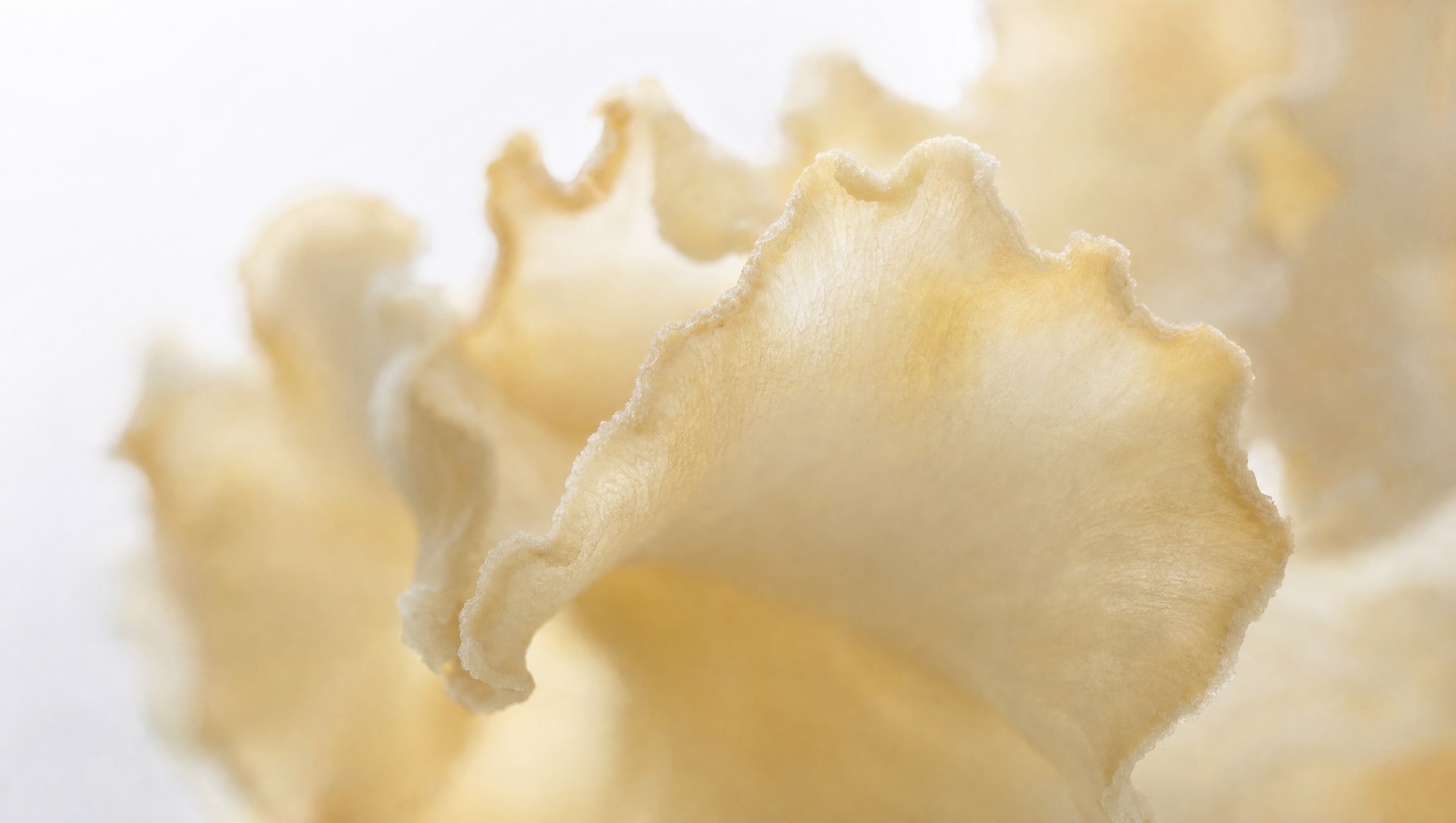
Sparassis crispa grows at the base of conifers, living off the roots and heartwood of pines and other softwoods. It fruits from late summer into autumn, one dense cream-coloured mass of wavy ribbon-like folds, sometimes the size of a football, always unmistakable once you have seen one.
In Japan it is hanabiratake, the flower petal mushroom, and it has been prized there for long enough that serious money went into learning to cultivate it. That turned out to be difficult. It is slow, it is fussy about its substrate, and it will not be rushed, which is precisely why you will not find it in the supplement aisle next to the species that grow happily on a bag of sterilised grain.
Why anyone cares
By dry weight of the fruiting body, measured by enzyme method. Most culinary mushrooms sit in the single digits.
43.6%beta glucan in the material Cellivoo uses
Published review work puts the species above 40% of dry weight. Quality fruiting body extracts across all species generally run 25 to 40%. Grain-grown mycelium has tested at approximately 10% or less once the starch is separated out, and in some cases as little as 1%.
At 400 mg of extract per serve, 43.6% works out to roughly 174 mg of beta glucan in one millilitre.
The molecule
Beta glucans are chains of glucose. What separates one from another is how the links are joined, and the join determines the shape of the whole molecule.
Oats and barley contain beta glucan too, and there is a large literature on it, including authorised claims in several jurisdictions. That literature describes a 1,3 and 1,4 linear molecule.
Mushroom beta glucan is 1,3 with 1,6 branches. Different shape, different behaviour, different body of research. Brands blur the two constantly, usually by citing oat research on a mushroom page. None of it transfers, and we are not going to do it here.
The full inventory
A published review of the species catalogues the following in the fruiting body. Proteomic work on it has identified 115 distinct proteins, and the genome was sequenced and published in Scientific Reports in 2018.
| Compound or fraction | What it is | Reported level |
|---|---|---|
| Beta glucanCalled sparan in the literature | Branched 1,3 / 1,6 polysaccharide, the principal constituent of the dried body | More than 40% by dry weight |
| Vitamin D2 | Ergocalciferol, reported at a concentration higher than in other mushrooms | 0.17 mg / 100 g |
| p-Hydroxybenzoic acid | The quantitatively predominant antioxidant compound identified in the species | 43.92 mg / 100 g |
| Glucosylceramide | A sphingolipid, present at a relatively large amount for a mushroom | ~0.2% |
| Sparassol | A benzoate derivative named after the genus, one of several antifungal compounds isolated from it | present |
| Ergosterol, ubiquinone-9 | Sterol and quinone fractions | present |
| Phthalides and chalcones | Further characterised secondary metabolites | present |
| Fibrinolytic enzymenamed wulfase | An enzyme fraction isolated from the species | present |
| Glutamine, asparagine | The two most abundant amino acids in the fruiting body, in that order | Not quantified |
| Potassiumwith phosphorus and sodium | The dominant minerals of the mushroom itself, separate from the ocean mineral profile | high |
| Vitamin E, vitamin C | Both reported present in high amounts in review work on the species | high |
| 115 distinct proteins | Catalogued in proteomic analysis | 115 |
| Water | Of the fresh fruiting body, before drying and extraction | ~90% |
The state of the research
Sparassis crispa has been studied a great deal. It has barely been studied in people. Both of those sentences are true, and the gap between them is where almost every misleading mushroom claim on the internet lives.
There is a systematic review and meta-analysis in the literature covering 33 randomised controlled trials of this mushroom. The paper calls them randomised controlled trials, but all were preclinical. That is not a human evidence base.
Here is what the paper says in its own words: "All these thirty-three studies estimated the S. crispa benefits based on rats, diabetic mice, and cancer cell test."
Every one of those trials ran in animals or in cell culture. The endpoints were disease endpoints in animal models. Not one was a human trial. This review does not establish a human evidence base.
You will find that meta-analysis quoted on supplement pages as though it were human evidence. Now you know what it actually is, and you can check it yourself in thirty seconds.
Listed so you can see the shape of the field. Every line is animal or in vitro work on the mushroom or its extracts.
Immune signalling. Beta glucan fractions activating dendritic cells and macrophages.
PreclinicalAntioxidant activity, by radical scavenging and lipid peroxidation assay.
In vitroAnti inflammatory work, including mast cell and stimulated macrophage models.
In vitroAntifungal and antibacterial activity of isolated compounds including sparassol.
In vitroMetabolic work in diabetic animal models.
Animal, disease modelComposition and structure. Beta glucan quantification, phenolic profiling, proteomics.
CompositionGenome sequencing of the species, published 2018.
GenomeHow it reaches the bottle
Cultivated Sparassis crispa, sourced from Korea, where the growing techniques for this difficult species are well established. Wild harvest at any commercial scale would not be sustainable or consistent.
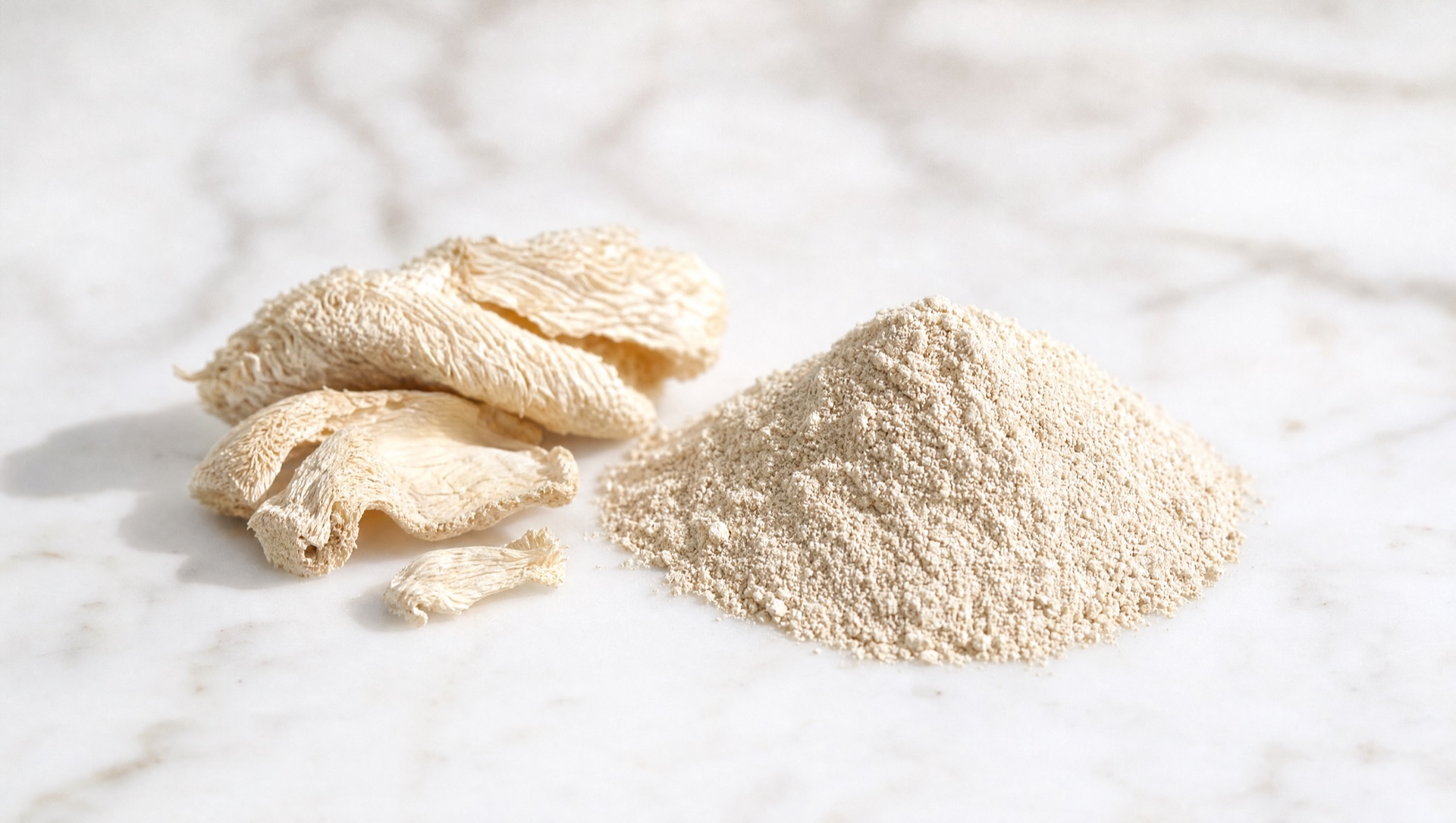
The mushroom itself, not the mycelium and not the substrate it grew on. This is the single most important line on any mushroom label, and it is the reason the beta glucan figure is what it is.
Dried and extracted, then tested for beta glucan specifically rather than for total polysaccharides. The material used in Cellivoo returns 43.6%.
Blended into the olive oil emulsion with the ocean mineral concentrate, at 400 mg of extract per 1 mL serve.
The reading list
Medicinal, nutritional and nutraceutical potential of Sparassis crispa: a review. The source for almost every composition figure on this page.
Composition reviewGenome sequence of the cauliflower mushroom Sparassis crispa and its association with beneficial usage. Scientific Reports, 2018.
GenomeEffects of Sparassis crispa in medical therapeutics: a systematic review and meta-analysis of randomised controlled trials. Thirty-three randomised controlled trials, every one of them in rats, mice, or cell culture, not in people. Read the methods section.
Animal / in vitroMeasurement of beta glucan in mushrooms and mycelial products. McCleary and Draga, J AOAC Int, 99(2), 2016. How beta glucan is separated from starch.
Validated methodRedefining Medicinal Mushrooms. Chilton, 2015. Approximately 100 mushroom and mycelium samples analysed, mushrooms against commercial mycelium-on-grain products. The source for the comparison figures.
Product analysisFour hundred milligrams of it, daily
Sparassis crispa is one of three ingredients in Cellivoo, alongside cold-pressed olive oil and a measured ocean mineral profile.